
Ah – the year 2020. The year that will always be remembered for the COVID-19 pandemic, world wide lockdowns, toilet paper shortages, and the dreaded implementation of facemasks. A year that, like every other year, has slipped into the rearview mirror as we inevitably move forward to the next . . . but a year that will not quickly be forgotten or dismissed. You all know we are going to be seeing 2020 memes and movies for the next fifty or more years, right? On the surface, we could just look back on the year for what it was: a time when our lives completely shifted and things got hard. Or, we can look deeper. Past what the future ‘2020 history textbooks’ will say, past what everyone else is saying and choose to be introspective. Just because a year was hard does not mean we should wish it away nor should we move on without taking a look back to count the good and encounter the hard. Each year can have its own goodness and hardship, and, in the end, the hardship is only worth something if we choose to look back, no matter how painful, and take inventory of the lessons learned.
REMEMBERING IS IMPORTANT
Humans easily forget. Ever heard the phrase: “history repeats itself”? That phrase exists because humans forget the lessons we have learned.
“If history repeats itself, and the unexpected always happens, how incapable must man be of learning from experience.”
George Bernard Shaw (Irish Playwright)
I get frustrated with my inability to remember life lessons learned and I hate having to relearn them multiple times over. Especially when, after learning something for the seventh time I am hit with Deja Vu and think: “OH! Right. I forgot.” There is almost nothing more frustrating to me than this. And, I don’t even think that it is avoidable. We are humans and we are limited in our mental capacity and ability – let’s not fool ourselves to think otherwise. The Bible itself is full of stories that point to patterns of human forgetfulness. One of the most important things we forget is God and all that He is done for us. The book of Joshua recounts the story of the Israelites journey, with their leader Joshua, to a land promised to them by God. In order for them to get to this land, they have to pass through the Jordan river. At this point in the year the waters were really high and it was impossible to safely cross with all the people and their belongings. But God did a cool thing, a miraculous thing, so that his people could safely cross. He parted the waters so they could walk through on dry land. Now, this may not have been as dramatic of a ‘water parting’ as the account in Exodus where Pharaoh and his entire army were chasing the Israelites to prevent them from leaving Egypt . . . but, it was one of those things that you don’t every want to forget.

God, knowing those whom He created and knowing how easy it is for us to forget things (even something as awesome as a parting water miracle), asked his people to set up an altar of remembrance. Something that, whenever they or their future generations looked at it they could be reminded of God’s goodness and faithfulness to them.
“Go over before the ark of the LORD your God into the middle of the Jordan. Each of you is to take up a stone on his shoulder, according to the number of the tribes of the Israelites, to serve as a sign among you. In the future, when your children ask you, ‘What do these stones mean?’ tell them that the flow of the Jordan was cut off before the ark of the covenant of the Lord. When it crossed the Jordan, the waters of the Jordan were cut off. These stones are to be a memorial to the people of Israel forever.”
Joshua 4:5-7
We may not gather rocks and make memorials each time we want to remember something, but it’s important to know that remembering is important. I wish it wasn’t so easy for us to forget things. And maybe you have a way better memory than me, but the fact is that it is much easier to remember an event or situation than to recall the emotions that stirred up in you or the depth of the impact of that moment. That is, unless we take time to reflect and remember.
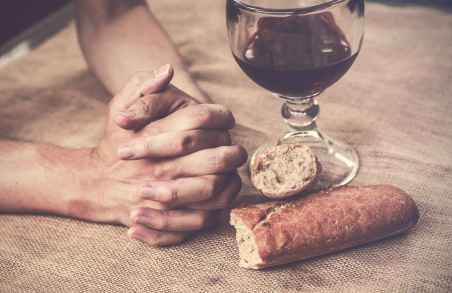
Even Jesus, on the night when he was betrayed gathered His disciples together and instituted something called ‘communion’. Communion, the bread and the juice that we eat together as Christians, was founded so that Jesus’ disciples could remember Him and His sacrifice and take the time, as often as we need, to reflect and not forget His sacrifice.
“And he took bread, and when he had given thanks, he broke it and gave it to them, saying, ‘This is my body, which is given for you. Do this in remembrance of me.'”
Luke 22:19
This may not be a gathering of rocks and the building of a monument, but all of these physical rituals were done with the intention of assisting human remembrance. Part of the joy when January 1st rolls around is a refresh, restart, and reset for something new – if you want it. But, moving on from significant events or even into the next year without taking time to remember or setting up a reminder is a dangerous thing. So, I invite you to spend some time taking inventory on this last year. What was hard? What was a joy to experience? What was something that made you sad? What was something you were proud of this last year? What are you thankful for? What did God teach you (either about Himself or yourself)? Even if we can’t help eventually forgetting some stuff and inevitably repeating some of the things we didn’t ever want to, I do think we can at least help ourselves do a better job of remembering. And remembering begins with taking the time to intentionally sit and reflect. So I invite you to take the time to reflect on 2020. And as you do so, you can read the top three things that I learned this last year that I don’t ever want to forget.
THREE THINGS I LEARNED FROM 2020 THAT I DON’T WANT TO FORGET
First, 2020 taught me what God’s peace looks like. This year itself was the opposite of that – it was chaotic. It was a year of upheaval, change, unrest and the unknown and, if we were to sit down and give a detailed description of what we think peace should look like, 2020 would not fit that description. But God’s peace is not what we would think. In fact, it’s not something we can really understand or comprehend. I have struggled on and off with anxiety for as long as I can remember. Anxiety brings with it an inner turmoil relating to fear – and part of that fear for me is the unknown. Surprisingly enough, after coping with the initial shock of the world shutting down in March 2020, I trusted that God was on the move and that He is in control. I had dozens of conversations with people who were (and still are) wishing away this experience to go ‘back to normal’ because it is hard and not ideal and yet, God has instilled in me a sense of gratitude for where we are at and a deep trust in what He is doing behind the scenes. The thing is, this radical faith, groundedness and contentment that I am feeling was quite unknown to me. In September, I video chatted with a couple of friends who Pastor at different churches in Alberta. I relayed the way that I felt to them and said: “I feel like maybe something is wrong with me, or I’m pushing down the real problems that I might have to deal with to live in this state of contentment and that I’m going to have a lot of unresolved grief to deal with later.” My friend Brandon looked at me and said: “Do you think maybe you’re experiencing the peace of God in your life right now and it’s not something you are familiar with so you just didn’t know that’s what it felt and looked like?” I realized in that moment that was it exactly. God’s peace is not what we expect. Often times when I think of what peace should look like I think of a beautiful meadow filled with flowers with a clear stream running through it and the sound of birds chirping in the background. As nice as that sounds, that is not the peace of God. What I learned this year about God’s peace is that it can co-exist with adversity and hardship and that the key to receiving this peace is faith-filled reliance on Christ and a deep trust in God and His sovereignty. I would not wish away the experiences of 2020 because I experienced the peace of God.
“I have told you all this so that you may have peace in me. Here on earth you will have many trials and sorrows. But take heart, because I have overcome the world.”
John 16:33
Second, 2020 taught me that family and friends are not the most important thing. GASP! Every Instagram influencer and celebrity this year seemed to learn that family and friends are the most important thing. It was what they were all sharing as they were forced to be home (like the rest of us) and had to be in close proximity with those in their household. Don’t get me wrong, family and friends are really important, but they should hit number two on the list – not number one. This year, I learned that the most important thing is Jesus. This is something that I knew already, but in a year when everything is constantly changing and you don’t know what tomorrow will bring, I learned to cling to the One who never changes. Family, friends, jobs, money, hobbies, everything we know and love can all be taken away and if those are the most important thing then we will crumble.
This year, one of the hardest parts for me was when our government did a second lockdown heading into Christmas. I mean, COME ON. Of all the times to choose to do a lock down . . . CHRISTMAS?! I am a pastor and so it is very rare for me to get a Christmas Eve off. But two years ago (not even joking) I booked off Christmas Eve 2020 because my husband and I were going to be with my family that year and my family’s Christmas eve tradition is a huge part of our celebration. It had been years since I had spent a full Christmas Eve with my family. This year, everyone was going to be there and it was going to be amazing. I couldn’t wait! And then the lockdown happened and our whole province was told that we could not join anyone else for Christmas . . . it was against the law to drive to Calgary and gather with loved ones because of the increased potential to spread COVID. I was disappointed. I am still disappointed that we missed out on that time in the way that I had hoped for it. But, my family made the most of our time together facetiming all day, opening presents and drinking coffee over zoom and eating Christmas dinner together online.
Family is so important. Invest in your family, love them, make time to spend with them, and share life with them. I hope that 2020 reminded you of how important people are! But remember, that Jesus is more important. So, invest in Him, love Him, make time for Him and share your life with Him.
“‘Teacher, which is the greatest commandment in the Law?’
Jesus replied: ‘Love the Lord your God with all your heart and with all your soul and with all your mind. This is the first and greatest commandment. And the second is like it: ‘Love your neighbor as yourself. All the Law and the Prophets hang on these two commandments.'”
Matthew 22:36-40
Third, 2020 taught me that Church is meant for more than just Sunday mornings. 2020 was the year the church was asked to shut its doors for several months. And not for any religious discrimination or persecution reasons – for safety reasons. For close to one hundred years the church has been used to doing the same thing all of the time. The Sunday morning gathering usually includes a time of teaching for kids, worship through singing and prayer and a sermon. Throw in communion once a month and a baptism every once in awhile and TA-DA – you have church. Most churches have mid-week programming as well (a youth or young adults group, Bible studies, women’s ministry groups, etc.) as well as some other evangelism events or serving opportunities. These are all good things. In fact, I love working for the Church! But when things shut down we were forced to change how we were doing things. As stressful as that’s been (evaluating week by week what that should look like and losing church members because of this) it has been a gift. From the moment we were forced to change, I felt encouraged; stressed, yet encouraged. Why? Because sometimes when you do the same thing all of the time for a long time it becomes less meaningful and loses its effectiveness. When you mindlessly create the same service order outline each week and teach the same style of lesson or stick to your same three point sermons all of the time, where is there room for encountering God? Where is there room to hear from Him and do what He wants to do with His church? Yes, people can still encounter God in this sameness. But being forced to change is not a bad thing. Instead of feeling like we are losing everything, why not look for an opportunity to seek God’s heart and direction?
“It should not feel out of the ordinary, harsh, or inappropriate to call the Church to change. Nor should we imagine that our unique expression of Church is the only one God sanctions. Instead, we should be constantly seeking renewal, being ready at any moment to discard the elements of Church that lead us away from God’s heart rather than toward it.”
Francis Chan, Letters to the Church (page 190)
The Church puts a lot of emphasis on the building. I know, we preach all the time that “the church is not the building, it’s the people.” But then, when the building is in lockdown, the church itself panics and doesn’t know what to do with itself. When church moved online and into our living rooms (which is where it all started in the first place anyways), people drop off and stop attending and the church shrinks. Why? Because for so long church happened in a building on Sunday morning. And for some people, that’s all their faith ever was. It was dependent on what happened on Sunday morning. So of course when that’s not available anymore, they disappear (I have more to say about this in my post “The Every Minute Christian”). But church is more than what happens on a Sunday because your faith is more than that. Our faith should be seeded into every single part of our lives. And gathering on Sunday morning in a building set aside for worshipping the Lord as we have been for all of these years is a privilege but it’s not the only way to gather together in fellowship and worship. Should we still gather together and worship as the church? YES. This is not license to stop being in community . . . it’s not even permission to stop attending church on Sunday morning (the Bible speaks against this in Hebrews 10:25). 2020 for the church was simply a reminder that things will change (and that change is good), that God is in control of everything happening (including the Church being online and the building being shut down), and that gathering as a community can happen in many different ways and many different times of the week outside of the church building (and not even run by the church staff itself!). Being ‘the church’ is an every day, every moment call from Jesus – not just for Sunday morning.
“For in Him we live and move and have our being.”
Acts 17:28
YOUR TURN!
After reflecting, this is what I’ve come up with. God has put these three things on my heart and I don’t ever want to forget the lessons that have come from this year. Remember, it is in adversity and hardship that we grow. These lessons in particular are growth moments for me this year. Were they hard to learn? Sometimes, yes! What about you? Take the time to reflect on 2020 and remind yourself of the lessons you learned this year. Don’t head into 2021 wiping your hands clean of this past year, ready to move on and forget. Set up your memorial (whatever that looks like for you), praise God and remember.
Written by: Justine Joy
 Refined Joy