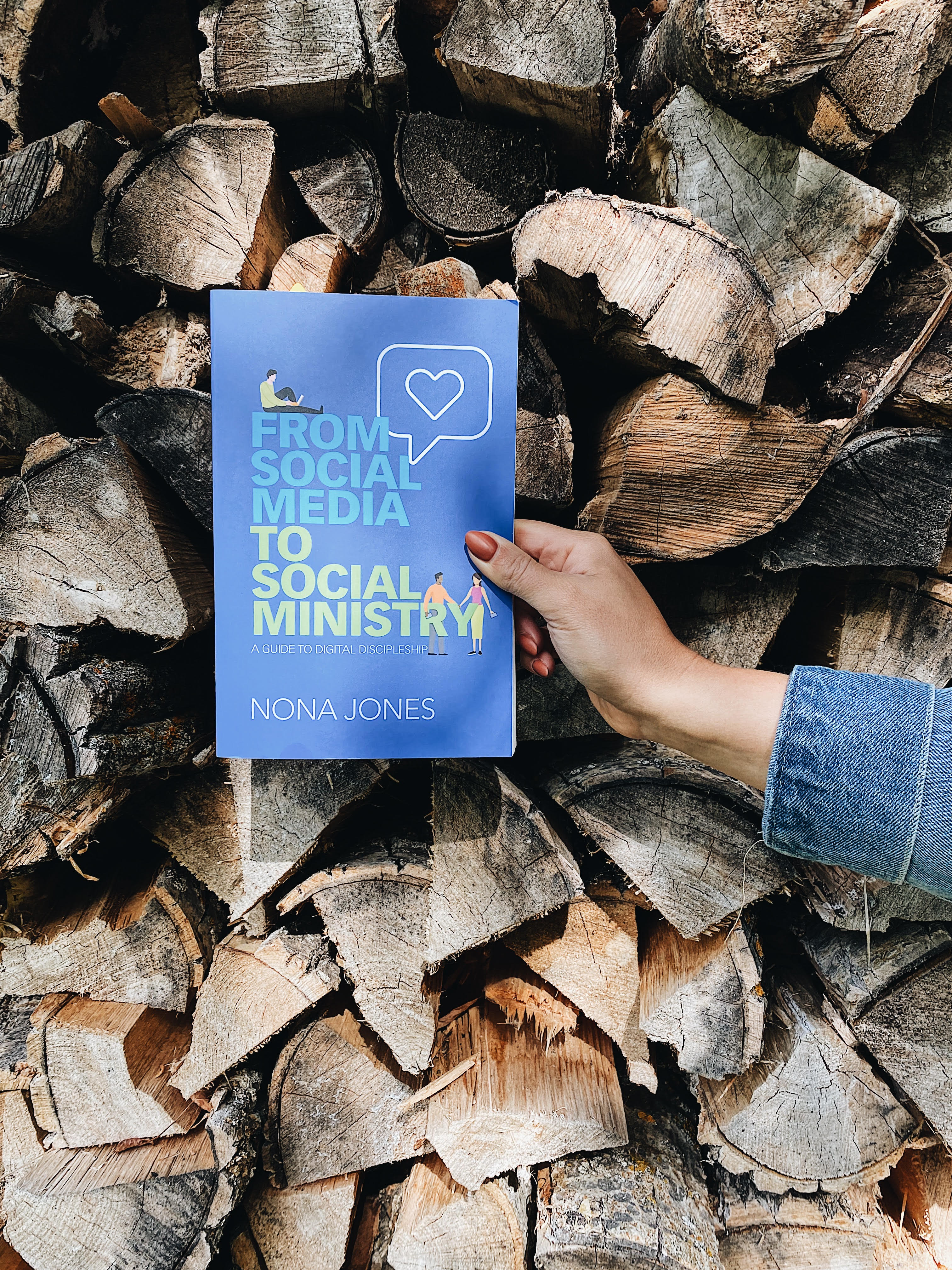
I first heard of the author, Nona Jones, when I listened to her speak on Carey Nieuwhof’s leadership podcast. Her and Carey talked about social media and online ministry and the reason why it is of value in our world today. This is especially important now that churches have been forced online during this COVID-19 pandemic. Nona Jones has been ahead of the ‘online game’ for many years and has participated in this online world by working for Facebook to help churches build their online church ministry “leveraging social technology to build The Kingdom.” At Facebook, Nona works as the company’s head of global faith partnerships. Yes, seriously! How cool is it that Facebook has someone like Nona and her position on board their team? Now, more than ever, churches need the help of experts like Nona to be obedient to Jesus in taking the Gospel to uncharted territory – the World Wide Web. Nona wrote her book From Social Media to Social Ministry during the COVID-19 pandemic and this book was published only a few short months ago – in June 2020. Talk about relevant to the times!
Nona shares on Nieuwhof’s podcast her reason for writing her book. In February 2020, she saw the Barna 2020 “state of the church” report that stated that the very last thing on the mind of a modern day church leader was social technology. Social media and digital technology have been around for decades, and yet, a only a very small percentage of churches were thinking about how to leverage this resource. Three weeks after this report was released, COVID-19 hit North America and churches were forced to close their doors and head online. Nona took this opportunity to write and to share what she has been preaching for many years: the importance of making digital discipleship a central part of every church’s ministry approach and the ‘how to’ to getting started.
I have to honestly admit that I fit into that same category in February . . . I am a church leader and social technology was one of the last things on my mind. Many years ago, our church leaders paid for an in depth personality quiz that helped share with us our strengths and weaknesses as well as show us how we can work better together on our team. No joke, technology ranked last on my ‘gifts and abilities’ list with a mere 5% ability. So honestly, if I can figure out how to do something online, then I seriously believe anyone can. Working with technology is a huge stress point for me. It never does what I want (anyone else find that or is that just me?)! This has made the last seven months of online children and young adults ministry and learning how navigate discipleship online really interesting for me!
As our church service moved online, I was forced to move our young adults Bible study and my discipleship group onto zoom, as well as learn how to record fun, interactive Bible lessons for the kids on my phone (pieced together with some added special effects). A lot of the young adults began to “check out” and stopped showing up to our online study. But, the impact of God’s Word on those of us who continued to show up, pray and learn together, was not hindered at all just because there was a computer screen. For the kids, it was a bit different. I mean, the best part of teaching the kids is being with the kids and interacting with them . . . and so talking to my phone just wasn’t the same. But, God shifted my vision for my online Kid’s Ministry. I realized that, focusing on the kids on their own was not going to have the greatest online impact. Making shorter videos that had space in them for families to interact, pray and read scripture together – to lead each other to Jesus with some help and prompting from Pastor Justine’s face on the video – would reap the most fruit in the online world. The positive impact and the continued growth of people’s faith that I saw in both my ministries made me wonder if there really was something to this ‘online ministry’ thing.
WHY do Churches need to buy in to building a Social Ministry?
So many times, the church has tried to carry out Jesus’ Great Commission by themselves. I feel like God has opened up many opportunities over the years to make reaching people with the Gospel message easier, and each time it’s taken us awhile to notice – because we are too busy doing our own thing. A few years ago I took a class called “Alliance History and Thought”. I work for the Christian and Missionary Alliance Church in Canada and it was a requirement for me to take a class outlining the history and development of our churches over the years. One of the things I love about the C&MA is their desire to “GO” and to be a group of churches that supports local and global missions as well as equips and sends out missionaries into the field. During the mid 1900’s, our churches were focus on sending out missionaries into all of the corners of the world to share the Gospel. We were doing a good thing! But somehow, in the midst of being busy sending, we missed the fact for so long (and sometimes still miss out on it!) that Canada was becoming so diverse and multicultural as people from all around the world were moving here. God had opened the doors to literally bring the nations to our fingertips and we were missing out on huge parts of this ministry because we were too busy going OUT. Not a bad thing to be sending people, but we needed to be hit over the head a bit to realize the awesome things that God was doing to share Jesus with the nations. This same problem happened with the Internet. God again, made it possible for people from all over the world to be able to connect online, in a space that is accessible by opening a laptop or turning on a phone. You can now chat with anyone from almost anywhere! Again, the nations became even more accessible; preaching the Gospel around the world just became even easier than getting on a plane and yet churches didn’t take advantage of this amazing opportunity for decades. Until recently, churches actually fought against the opportunity of getting online and leveraging this ministry opportunity. And now, with COVID-19, here we are, our hands being forced to do so.
“Facebook has almost 3 billion active monthly users, the vast majority of whom aren’t searching for your Facebook or the Facebook page of any church . . . yet research has shown that many of these people struggle with depression, suicidal thoughts, and feelings of isolation and helplessness. These people need the hope of Jesus, but they aren’t searching Google for ‘hope of Jesus’ because they don’t know he has the answers. Imagine what would happen if instead of waiting for people to find us, we went out and found them?”
Nona Jones
For so long I haven’t had the most positive view of the internet. But, Nona says that “the internet is not just a thing people do; it’s a place people live.” The second I started to see that the internet is full of real people with real problems and real hearts needing Jesus, that changed everything. I think sometimes we look at a profile on Facebook or Instagram and hold that at a distance, not recognizing that when we hit the little ‘message’ button next to the profile we are connecting with a real life person on the other end of the screen. Nona emphasizes the evangelistic potential of utilizing the internet appropriately and taking advantage of this opportunity that is right in front of us.
“If you knew that 80% of your community gathered every day in one place, wouldn’t you strongly consider building a church there?”
Nona Jones
WHAT is a Social Ministry?
A big problem with every church being forced to be online right now is that they don’t really know “why” they are there or “what” they are doing there. Nona says that if you asked Pastor’s if they did ‘church online’ they would say yes – because they stream their service online. But, just like your people attending Church on Sunday morning is a small drop in a large discipleship bucket, so having an attender watch your service online is a small drop in their discipleship bucket. However, even though we instinctively know this, somehow going to Church on Sunday mornings has become the most important thing. Sunday morning is where all our resources go – time, money, pastors, volunteers, etc. I’m not saying it’s wrong to allocate a lot of resources and time into Sunday morning! I am just saying that, by doing this the Church has created a ton of “Christians” who only think about God on Sunday morning rather than every day and every moment of the week. This same problem that we have ‘in person’ is going to be transferred directly to online if we think that streaming the service on Sunday is the most important and the only part of a social, online ministry.
“A social media plan focuses on getting people to the building for a couple of hours every weekend, whereas a social ministry strategy focuses on how to help them grow in their faith through social technology after they leave.”
Nona Jones
This thought changes everything about how Churches should build their social ministry and why the congregation should invest in what their church is doing online as well as in person on Sunday morning. If we create social media plans we are focused on getting likes, comments and shares. But a social ministry plan’s focus is on building relationships and facilitating relationships between other people online as well as inviting conversations that allow every day discipleship to happen.
As churches, we must educate ourselves about this online world. We have the privilege of using the Internet and the resources there to reach people all over the world through our very fingertips. God has continued to make a way for us to share His Good News. Similarly, we can talk to almost anyone from our in person or online congregation all week. We have the opportunity to encourage, share Jesus, disciple and ‘spur each other on’ to live for Jesus as every day Christians through this same touch of our fingers. Some of you might be saying: “but online is nothing like being in person”. And you are right! They aren’t the same. But that doesn’t make the Bible studies, prayer groups or encouragements you send or interactions you have over the internet any less valuable.
Would I recommend this book? I would recommend the first half of the book to every single Christian. It is important for us to understand the value of where a big chunk of our church ministry budgets, resources and efforts are going to be going from now on – online ministry. This is a new area that is going to require the right people with the right spiritual gifts and the appropriate vision for reaching lost people through this means – and how will you know if God is calling you to invest in this if you don’t know what it is or why it’s important? The second half of the books is more about practical steps the online ministry leaders will need in order to build an online campus and invest and build relationship with people online. I wouldn’t say this part of the book is for everyone, although it’s definitely interesting to learn about! But if you read the first half of the book and you feel intrigued and a tug on your heart to participate in this kind of ministry in your particular church setting, then I would say you should read on.
Are you interested in reading this book? Click here to order you own copy.
Written by: Justine Joy
 Refined Joy